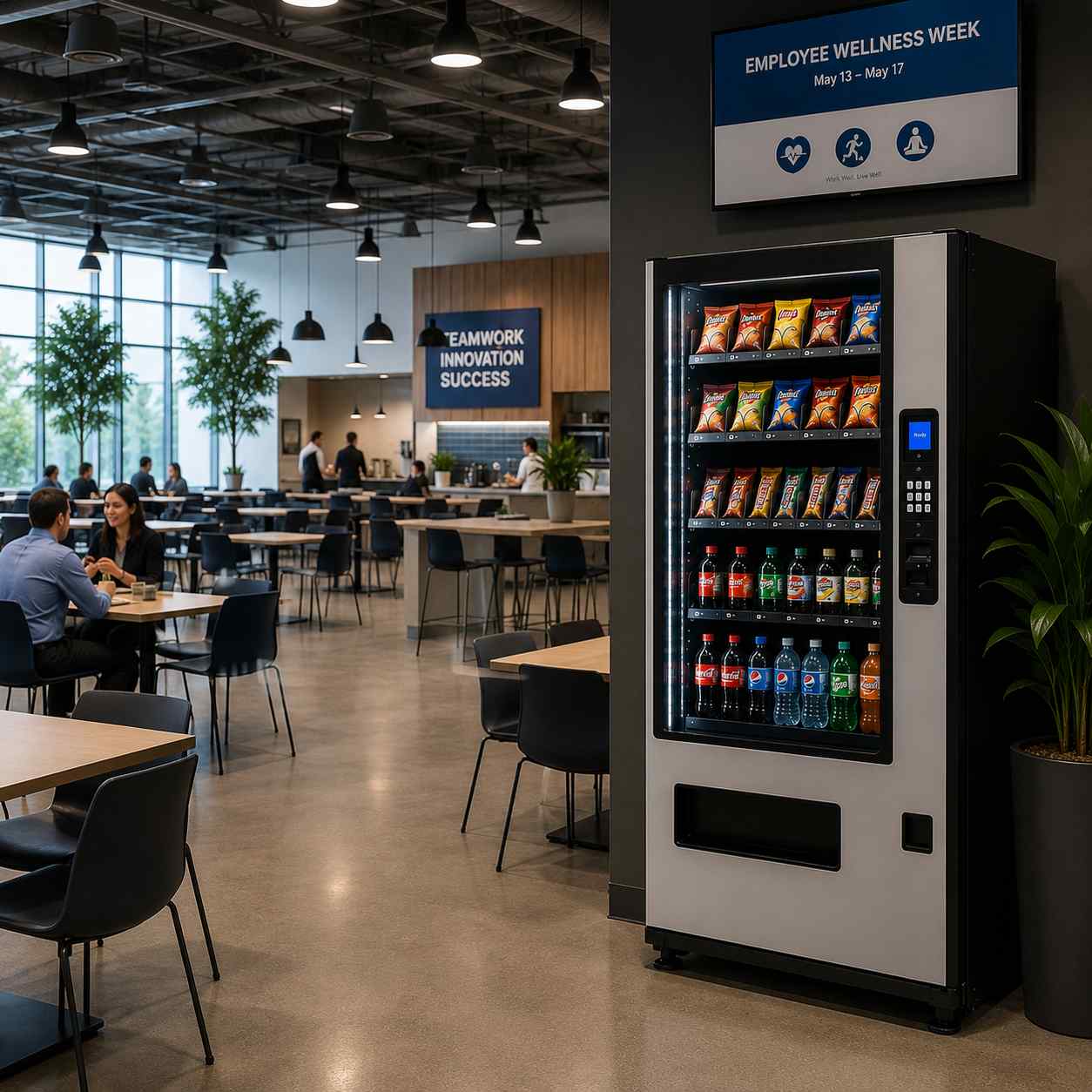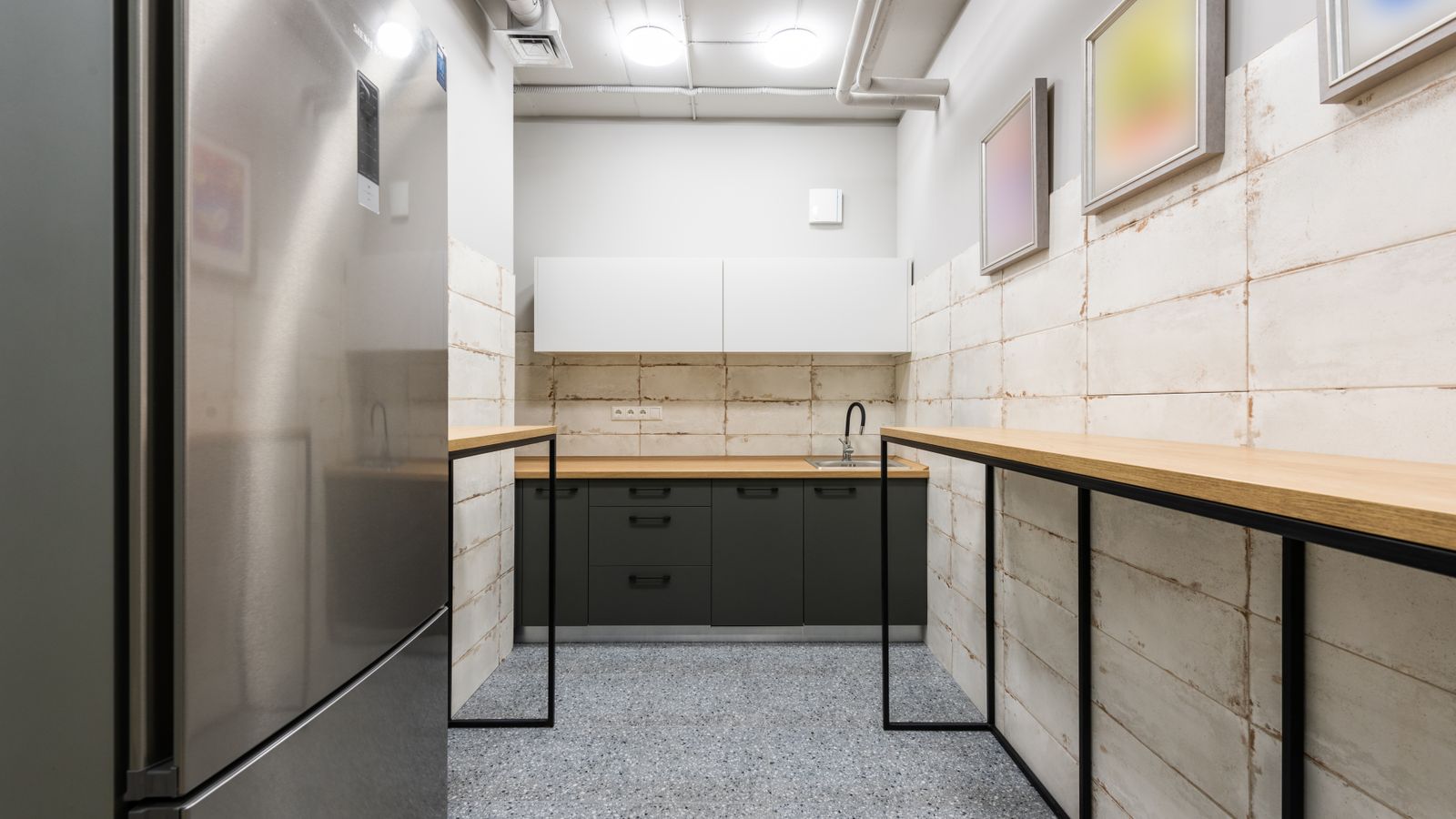
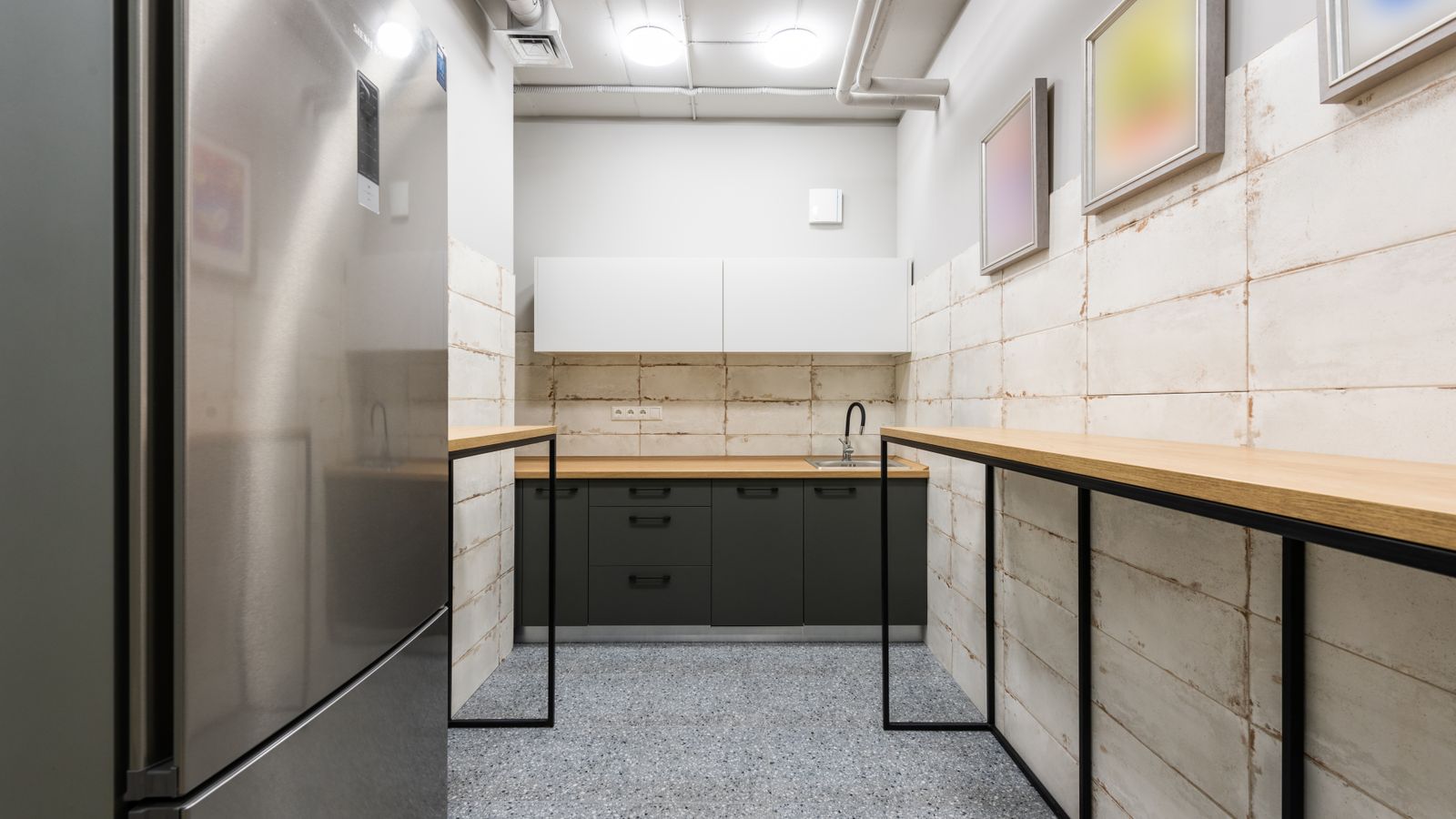
A full-size vending machine needs a floor space roughly the size of a large refrigerator, a standard grounded wall outlet close by, a few centimetres of space behind it for air flow, and a clear path from the door to the spot. That is usually all. We confirm the exact model, size and placement during a free site visit before anything is delivered.
How big is a vending machine?
Sizes vary by model, so treat these as typical, approximate figures for planning. We give you the exact dimensions of the machine we recommend for your site.
| Machine | Typical height | Typical width | Typical depth |
|---|---|---|---|
| Snack machine | About 180–185 cm (6 ft) | About 90–100 cm (35–40 in) | About 85–95 cm (33–37 in) |
| Drinks machine | About 180–185 cm | About 95–105 cm | About 80–90 cm |
| Combo snack and drink machine | About 180–185 cm | About 90–100 cm | About 85–95 cm |
| Coffee machine | Floor-standing and countertop models are both available; countertop units need a sturdy counter | ||
| Water cooler | Small floor footprint, plus a water line for bottleless models | ||
Two machines side by side (for example snack plus drinks) need roughly 2 metres of wall. If space is tight, one combo machine gives you both in a single footprint.
Power: what kind of outlet do you need?
- A standard grounded 120-volt wall outlet (the regular three-prong outlet found in Canadian buildings).
- Close to the spot, so the machine’s own cord reaches it. Extension cords and power bars are not used for vending machines.
- Ideally its own circuit, or at least not shared with a microwave, kettle or space heater. Refrigerated machines run a compressor, and a shared circuit is the most common cause of tripped breakers.
- Not switched off at night. Avoid outlets controlled by a wall switch or a timer, since drink and fresh-food machines need to stay cold.
If you are not sure about a circuit, our technician will check it during the site visit and tell you what, if anything, your electrician needs to do.
Clearance and air flow
- Behind the machine: leave a gap of about 10 cm (4 in) from the wall so the refrigeration system can breathe.
- In front: leave enough room for the door to swing fully open for restocking, and for someone in a wheelchair to reach the selection and payment area. About 1 metre of open floor works well.
- Above and to the sides: avoid tight alcoves and cupboards that trap heat.
- Away from heat and direct sun: next to a radiator or in a glassed-in sunny vestibule, a machine works harder and products warm up.
Floor and access path
A stocked machine weighs several hundred kilograms, so it needs a level, solid floor. Before installation, check the path from your loading door to the final spot:
- Doorways and hallways at least as wide as the machine’s depth, since machines are usually moved on their side or tilted.
- An elevator if the spot is not on the ground floor, plus any booking rules for the freight elevator or loading dock.
- No stairs on the route, if possible.
Special cases: cold lobbies, vestibules and outdoor spots
Canadian winters matter for placement. A machine right beside an entrance that opens all day, or in an unheated vestibule, can struggle with the cold, and drinks can freeze. Indoor spots a few metres from the door work best. If an entrance area or a covered outdoor spot is the only option, tell us during the site visit so we can recommend a suitable machine and placement, or a better spot nearby.
Quick checklist before your installation
- Pick a spot people pass every day, such as a break room, lobby or near a time clock.
- Measure the floor area and the narrowest door on the route.
- Find the nearest grounded outlet and check what else shares that circuit.
- Note any building rules for deliveries.
- Send us photos of the spot and the outlet; it speeds up the site visit.
For a wider list of what to review, see our free vending machine placement checklist, and read how free vending machine installation works.
Frequently asked questions
Does a vending machine need internet or a phone line?
No setup is needed from you. Our machines report their stock remotely for restocking, and card payments are handled by the machine.
Does the machine use a lot of electricity?
It uses about what you would expect from a commercial refrigerator for drink and fresh-food models, and less for snack-only machines. We can recommend a model that suits your space and power.
Who pays for installation?
We do. Machines, delivery, installation, stocking and repairs cost you $0, and there is no contract. Installation usually takes 3 to 5 business days after approval. See how this works for office vending machines, and check that we serve your area on our locations page.
Have a spot in mind? Book a free site visit and we will confirm the space and power for you. We reply within one business day.