
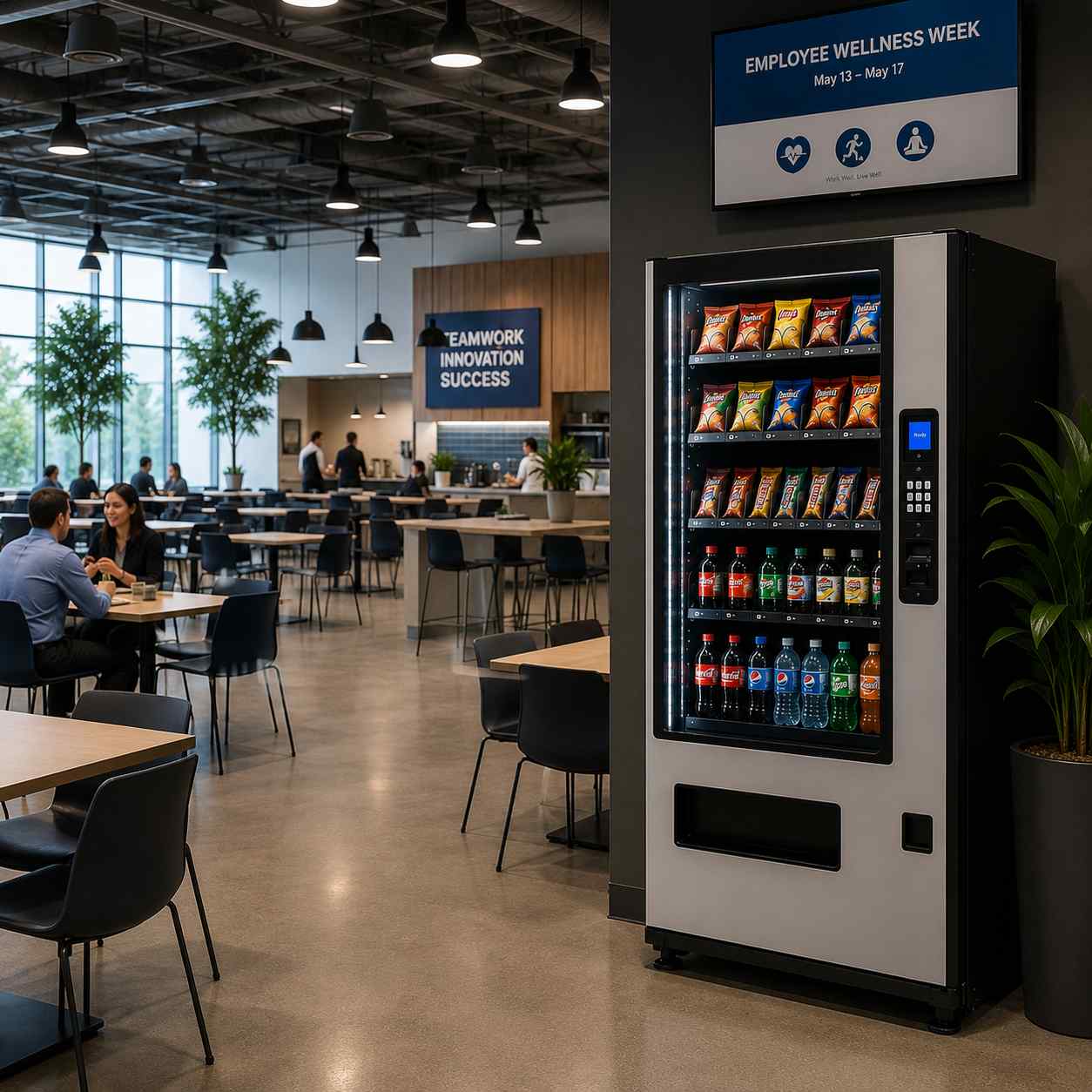
Vending looks like the perfect side business: machines sell while you sleep, there are no employees, and Ontario has thousands of offices, plants, schools and gyms that want snacks on site. The reality is more work than the YouTube videos suggest, and the hard part is not the machines — it is winning and keeping good locations. This guide walks through what it takes to start a vending machine business in Ontario, the real numbers, and the alternative most businesses choose.
1. Decide what business you are actually in
A vending operator does four things: finds locations, buys and places machines, keeps them stocked and clean, and fixes them when they break. Each one is a job. Before you buy anything, decide whether you want to be a one-route owner-operator (10 to 30 machines you service yourself) or build a company with drivers and technicians. The economics are very different.
2. Startup costs in Ontario
- Machines: a new snack or drink machine typically costs $3,000 to $8,000; combo machines and coffee machines more. Refurbished units run $1,500 to $4,000 but need more repairs.
- Card readers and telemetry: $300 to $600 per machine plus monthly data and processing fees. Cashless is no longer optional in Ontario workplaces.
- Initial inventory: $300 to $600 per machine for the first fill.
- Vehicle, dolly and tools: a van or SUV, a stair-climbing dolly ($1,000+), basic tools and spare parts.
- Insurance: commercial general liability, usually required by host locations.
A realistic starting budget for five machines with card readers, stock and insurance is $25,000 to $45,000.
3. Registration, taxes and food-safety rules
- Register the business with ServiceOntario (sole proprietorship or incorporation) and get a CRA business number. Register for HST once revenue passes $30,000.
- Vending machines selling food are regulated under Ontario’s food premises rules. Depending on the products (especially refrigerated or fresh food), the local public health unit may inspect machines, and operators handling food should hold a food handler certificate.
- Collect and remit HST on taxable items (most snacks and soft drinks are taxable).
- Some municipalities require a business licence; check your city.
4. Finding locations — the part that decides everything
A machine in a 15-person office loses money. A machine in a 150-person warehouse with shift work can clear several hundred dollars a month. Good locations in Ontario: manufacturing and logistics facilities, hospitals and long-term care, colleges, large offices and call centres, gyms, hotels and apartment buildings. Expect to make dozens of cold calls and site visits for every placement you win, and expect established operators — including us — to be competing for the same sites with free placement, telemetry and 24/7 service.
5. Realistic margins
Gross margin on products is typically 40 to 55 percent. After product cost, card fees, fuel, insurance, repairs and your time, a well-placed machine nets roughly $75 to $300 a month. Thirty well-placed machines can be a full-time income; five machines is a hobby that pays for itself. The variables that matter most are foot traffic, restocking efficiency (route density) and keeping machines working.
6. The questions new operators underestimate
- Who covers the shift when you are sick or on vacation?
- How quickly can you fix a bill validator or a compressor on a Friday afternoon?
- How will you know a machine is empty or broken before the host calls to complain?
- What happens when a bigger operator offers your best location a brand-new machine with tap-to-pay for free?
If you just want vending at your own business
Many people searching for “how to start a vending machine business” are actually business owners or managers who want a machine in their own break room and assume they have to buy one. You do not. With free vending machine placement, an operator supplies a new machine, installs it in 3 to 5 days and handles stocking, cleaning and repairs at no cost, earning from product sales. For most Ontario workplaces with 40 or more people on site, that is the better deal — no capital, no restocking runs, no repair calls. See our Ontario service page or compare the options in rental vs. free placement.
Frequently asked questions
Do I need a licence to operate vending machines in Ontario?
You need a registered business and HST account, must follow Ontario food premises regulations for the products you sell, and some municipalities require a business licence. Check with your local public health unit and city hall.
How much does one vending machine make per month?
Anywhere from a loss to several hundred dollars net. Location traffic is the deciding factor; a typical well-placed machine nets $75 to $300 a month after all costs.
Is it better to buy or to host a free machine?
If you want to run a vending route as a business, you buy. If you want a machine at your own workplace, hosting a free, fully serviced machine costs nothing and saves the work.
Want a machine at your location instead of a business plan? Request a free vending machine — we reply within one business day and install in 3 to 5 business days.
